The Aesthetic Appeal of the Whiskey Route
The Machame Route is widely known as the "Whiskey Route," a name that suggests it is tougher and more intoxicating than the easier Marangu "Coca-Cola" path. It is often the first choice for trekkers who want a more rugged, outdoor experience. Unlike the hut-based Marangu route, Machame requires camping every night. For some, this sounds like a drawback, but in a luxury context, it is actually a benefit. You aren't confined to a crowded, noisy hut with forty other strangers. Instead, you have your own private sanctuary.
The scenery is the real draw here. You start in the dense, emerald rainforest of the lower slopes and emerge onto the Shira Plateau, where the views of Kibo peak are nothing short of staggering. But the beauty isn't just about the peak itself. You’ll walk through the moorland and alpine desert, seeing the massive, prehistoric-looking Groundsel trees and Lobelias that seem to belong on another planet. The trail wraps around the southern circuit of the mountain, offering shifting perspectives of the glaciers that you simply don't get on other routes.
But beauty comes with a price in physical effort. The trails are steeper and the days are often longer. You will find yourself navigating ridges and valleys rather than the more linear path of Marangu. This variety is what makes the Machame route climbing tours so popular for those who have a bit of hiking experience and want to feel like they are truly exploring a mountain rather than just walking up a staircase.
Why Seven Days is the Gold Standard
You might see six-day Machame route packages advertised, but we tend to steer travelers toward the seven-day option. Why? Because that extra twenty-four hours on the mountain is the difference between a miserable struggle and a triumphant summit. Kilimanjaro is a tall mountain, and your body needs time to create the extra red blood cells required to function at nearly 20,000 feet.
The seven-day itinerary typically adds an extra night at Karanga Camp. This breaks up the long stretch between the Barranco Wall and the high camp at Barafu. By spending this extra time at a mid-range altitude, you are following the classic mountaineering rule of "climb high, sleep low." You ascend during the day to stress the body slightly, then drop back down a bit to sleep and recover.
So, when you are looking at the Machame route trekking tours on this page, pay attention to the day count. A seven-day trip is more expensive because you are paying for an extra day of food, porter wages, and park fees. However, the success rate for seven-day climbs is significantly higher than for six-day climbs. It is a classic case of spending a little more to ensure the entire investment isn't wasted by a premature descent due to altitude sickness.
Elevating the Camping Experience
When we talk about luxury on a camping route, we aren't talking about five-star hotels. We are talking about the quality of the gear and the level of service that makes the mountain environment bearable. In a standard trek, you might be squeezed into a small tent with barely enough room for your sleeping bag. In a luxury package, the tents are often larger, allowing you to stand up or at least sit comfortably in a chair.
And let's consider the sleep system. A thin foam mat on the cold ground is the recipe for a bad night's sleep. Luxury Machame route packages provide thick, insulated sleeping mats or even raised cots in some cases. High-quality, -20°C rated sleeping bags are often included, ensuring that even when the frost forms on the outside of the tent at Barafu Camp, you are warm and rested.
The mess tent is another area where the difference is clear. Instead of sitting on the ground or a rock to eat, you have a dedicated dining tent with a table and chairs. It becomes a social hub where you can talk with your fellow climbers, enjoy a hot meal, and dry out your gear. It's these small environmental controls that preserve your energy for the physical task of climbing.
The Legend of the Barranco Wall
One of the most talked-about features of any Machame route trekking tour is the Barranco Wall. From a distance, it looks like a vertical cliff that requires ropes and harnesses. The reality is quite different, but no less exciting. It is a 257-meter scramble that requires you to use your hands and feet in a few places, but it is not technical climbing.
You’ll hear people talk about the "Kissing Stone," a narrow section of the path where you have to hug the rock to pass. It sounds intimidating, but your guides are experts at navigating this section. They will be right there to show you exactly where to put your feet. The sense of accomplishment you feel when you reach the top of the wall and look back at the clouds below is a highlight for almost every trekker.
But the Barranco Wall serves a purpose beyond just a thrill. It forces you to "climb high" before you descend into the Karanga Valley. This movement is a vital part of your acclimatization process. It’s a physical challenge that rewards you with some of the best views on the entire mountain, including a direct line of sight to the southern glaciers.
Nutrition and Hydration at Extreme Altitude
Eating well on a mountain is difficult because altitude naturally kills your appetite. On luxury Machame route climbing tours, the kitchen staff works overtime to overcome this. They don't just serve calories; they serve flavor. You might find yourself eating fresh leek soup, grilled chicken, and even crepes at 13,000 feet.
The menu is designed to be high-carb and easy to digest. Your body uses a lot of energy just staying warm and breathing, so the food needs to be constant. You’ll have a hot breakfast, a hot lunch (rather than a dry packed lunch box in the dirt), and a multi-course dinner.
Hydration is equally important. Your support team will provide an endless supply of purified water. In a luxury setup, you aren't just getting water that has been boiled and cooled; it is often filtered to ensure it tastes good and is completely safe. You’ll also have access to ginger tea, a local secret for settling stomachs, and plenty of coffee or hot chocolate to keep your spirits up during the cold mornings.
The Reality of the Summit Night
No matter how much you pay for a luxury package, the summit night on the Machame Route is a test of will. You will wake up around 11:00 PM at Barafu Camp. The air is thin, the wind is often biting, and the trail is a steep zigzag up volcanic scree. It is a slow, rhythmic march in the dark, lit only by your headlamp and the stars.
A luxury tour provides the support you need to get through this. You’ll have a high guide-to-client ratio, often one-to-one on summit night. This means if you are struggling, a guide is dedicated solely to your pace, your breathing, and your safety. They carry the emergency oxygen and the medical kits, so you only have to focus on putting one foot in front of the other.
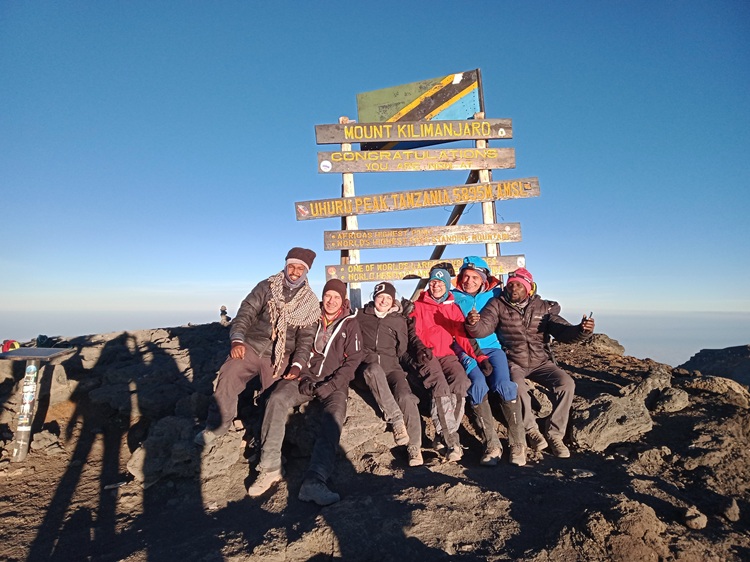
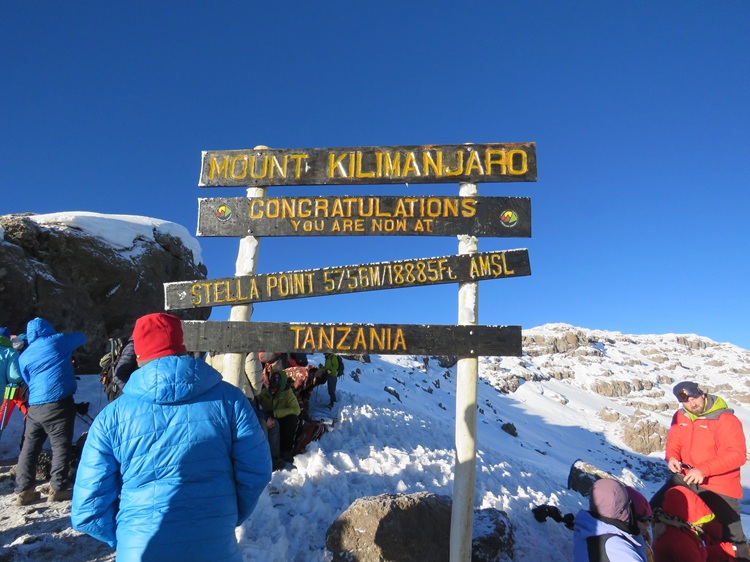
Reaching Stella Point on the crater rim just as the sun begins to rise is a profound moment. The light hits the glaciers and turns them a brilliant, glowing white. From there, it’s a gentler walk to Uhuru Peak, the highest point in Africa. The descent is actually faster but can be hard on the knees, which is why we always recommend using trekking poles, often provided as part of a luxury gear package.
Safety Standards and Medical Monitoring
Expertise is not just about knowing the path; it’s about knowing the human body. The guides on premium Machame route packages are trained to monitor you constantly. They use pulse oximeters to check your blood oxygen levels every morning and evening. They ask about your sleep, your appetite, and your headaches.
Safety is the most important luxury. This includes having a clear evacuation plan and carrying the necessary equipment to implement it. If someone develops signs of High Altitude Pulmonary Edema (HAPE) or Cerebral Edema (HACE), the crew knows exactly how to respond. They have the radio communication to coordinate with helicopter rescue services if the weather permits.
But safety also means the small things. It’s the way the porters set up camp to ensure the tents are secure against the wind. It’s the way the food is prepared to avoid any risk of stomach issues. When you book a high-end tour, you are paying for a massive "behind the scenes" safety net that you hopefully will never have to use, but will be glad is there.
Choosing Your Travel Style
Different tours on this page cater to different travel styles. Some travelers want a completely private experience where it’s just them, their partner, and the mountain crew. This allows for total flexibility in pacing. If you want to stop for an hour to take photos of a specific flower or a view, you can.
Other Machame route packages are designed for small groups. These are great for solo travelers or friends who want the social aspect of a group climb but still want the luxury of high-end equipment and better food. Group sizes are usually capped at eight or ten people to ensure that the "luxury" service isn't diluted.
Consider what matters most to you. Is it the privacy of your own tent and dining area? Or is it the assurance that you have the most experienced lead guide on the mountain? The options listed here allow you to filter through these preferences to find the trek that aligns with your personal goals for Kilimanjaro.
When to Plan Your Machame Trek
Kilimanjaro is hikeable year-round, but there are definitely better times to go. The dry seasons are from late June to October and from January to March. During these times, the Machame Route is at its most beautiful, and the trails are safer.
The Machame Route can get crowded because it is so popular. A luxury tour helps you manage this by using slightly different timing or selecting campsites that are a bit further away from the main noise of the bigger, budget groups. Your guides know the mountain's rhythm and can often time your departures to give you more "solitude" on the trail.
So, take your time browsing these Machame route luxury climbing tours. Look at the specific itineraries, check the inclusions, and think about how that seventh day might be the key to your success. Kilimanjaro is a massive undertaking, and choosing the right route and the right level of support is the first step toward standing on the roof of Africa.