Tour Overview
The 9-day Lemosho Route luxury Kilimanjaro climbing tour is the definitive choice for those who want the highest safety margins and the most comprehensive mountain experience available. While most climbers attempt the peak in six or seven days, this nine-day itinerary provides an ultra-slow ascent that virtually guarantees optimal acclimatization for any physically fit hiker. By spreading the climb over nine days, you are giving your body the maximum window to adjust to the significant drop in oxygen levels. This route starts in the remote west at the Londorossi Gate, offering a quiet, wilderness-heavy beginning that stands in stark contrast to the busier southern trails.
Choosing a 9-day Lemosho Route luxury climb allows for the inclusion of Moir Hut, a secluded camp located in a high-altitude valley that most trekkers never see. This additional stop is a strategic masterstroke for acclimatization, as it places you at 4,200 meters before you even reach the Lava Tower. The route profile follows a "climb high, sleep low" pattern more effectively than any other path on the mountain. You will traverse the entire Shira Plateau, circle the southern icefields, and approach the summit from the Barafu Ridge. This long-form journey ensures you experience every ecological zone at a pace that allows for genuine observation and physical recovery.
For the luxury trekker, nine days on the mountain means more time to enjoy the high-end support system provided by your professional crew. This includes spacious walk-in tents, high-quality mattresses, and a dedicated culinary team that prepares fresh, nutritious meals designed for high-altitude health. The challenge level is high due to the total duration, but the daily physical strain is lower than shorter routes because the daily distances are more manageable. Highlights include the undisturbed rainforests of the west, the volcanic formations of the Shira Cathedral, the famous Barranco Wall scramble, and the ultimate achievement of standing on Uhuru Peak at 5,895 meters. This itinerary is the pinnacle of Kilimanjaro trekking, combining the best route with the best possible timeframe for success.
Tour Snapshot
- Route Name: Lemosho Route
- Duration: 9 days / 8 nights
- Starting Altitude: 2,100 meters (6,890 feet)
- Summit Altitude: 5,895 meters (19,341 feet)
- Total Trekking Distance: Approximately 70 kilometers (43.5 miles)
- Highest Point Reached: Uhuru Peak (5,895 meters)
- Difficulty Level: High (Due to duration) / Moderate (Daily pace)
- Accommodation Type: Luxury Tented Camping
- Success Factors: 9-day ultra-slow acclimatization and Moir Hut inclusion
- Best Seasons: June to October and December to March
- Typical Daily Trekking Hours: 4 to 6 hours (Summit day is 12 to 15 hours)
Acclimatization Success
The 9-day schedule provides the highest safety margins on the mountain. By including Moir Hut and spending several days on the Shira Plateau, your body adapts naturally to the altitude. This virtually eliminates the risk of severe altitude sickness, allowing you to focus on the hike rather than the physical struggle.
Wildlife and Nature
Starting in the west offers a more pristine wilderness experience. You are more likely to see wildlife like the black-and-white Colobus monkeys and diverse birdlife. The transition through five ecological zones over nine days allows for an immersive understanding of the mountain's unique biodiversity.
Luxury Support
Nine days in the wilderness is made comfortable by a high-end support crew. You sleep in large, walk-in tents and eat multi-course meals prepared by a mountain chef. Private toilets, high-quality mattresses, and emergency medical equipment are standard features of this luxury expedition.
Weather Expectations
Weather on Kilimanjaro is unpredictable but generally follows a pattern. Mornings are often clear, with clouds moving in by the afternoon. The western side is more humid, while the alpine desert is dry and windy. Temperatures range from 25°C in the forest to -20°C at the summit.
9-Day Lemosho Route Luxury Kilimanjaro Climbing Tour: Day-by-Day Itinerary
Day 1: Londorossi Gate to Mti Mkubwa
- Starting Point: Londorossi Gate (2,100 meters)
- Ending Point: Mti Mkubwa (2,650 meters)
- Elevation Gain: 550 meters
- Approximate Distance: 7 kilometers
- Estimated Hiking Time: 3–4 hours
The journey begins with a drive to the western side of the mountain to the Londorossi Gate. After completing the park entry permits, a short drive on a rugged 4WD track leads to the Lemosho Glades. The trail starts in the lush, undisturbed montane rainforest. Because the Lemosho Route is less traveled at its start, the forest feels more wild and ancient than on other routes. The path is a gentle climb through massive trees, thick vines, and hanging mosses. The air is damp and cool, filled with the sounds of the jungle. This is the best place to see the black-and-white Colobus monkey, which is often heard before it is seen jumping through the high canopy.
Your first day of trekking is intentionally short. This allows you to settle into the rhythm of the mountain and get to know your crew. The incline is steady but not strenuous, serving as a warm-up for your legs. Mti Mkubwa Camp, which translates to "Big Tree" Camp, is situated in a forest clearing. Your luxury tents will be ready upon arrival, and your first mountain dinner will be served in the dining tent. The humidity of the forest makes the air feel heavy, but the shade keeps the temperature comfortable. This first night is about disconnecting from the world and preparing for the transition to the higher ecological zones that start tomorrow.
Day 2: Mti Mkubwa to Shira 1 Camp
- Starting Point: Mti Mkubwa (2,650 meters)
- Ending Point: Shira 1 Camp (3,500 meters)
- Elevation Gain: 850 meters
- Approximate Distance: 8 kilometers
- Estimated Hiking Time: 5–6 hours
The second day involves a significant change in landscape as you climb out of the rainforest and onto the Shira Plateau. The trail becomes steeper and more rocky as it winds through the heath and moorland zone. You will pass through giant heathers and shrubs that can reach several meters in height. As you gain elevation, the trees disappear entirely, and the views open up to show the vastness of the western slopes. This is a tough day of climbing, as you gain nearly 900 meters of altitude. The air becomes drier and the temperature begins to drop, making your layering system important for the first time.
Upon reaching the western edge of the Shira Plateau, the terrain levels out. Shira 1 Camp is located in a beautiful, open area with views of the sunset over the distant clouds. This is your first night sleeping at a significant altitude of 3,500 meters. The plateau is an ancient volcanic caldera, and its flat surface is a welcome relief after the steep forest climb. Your body will start to notice the thinning air here. Staying at Shira 1 instead of pushing higher immediately is a key part of the 9-day Lemosho Route luxury trek strategy, giving your cardiovascular system a chance to stabilize before the traverse to the center of the plateau.
Day 3: Shira 1 Camp to Shira 2 Camp
- Starting Point: Shira 1 Camp (3,500 meters)
- Ending Point: Shira 2 Camp (3,850 meters)
- Elevation Gain: 350 meters
- Approximate Distance: 7 kilometers
- Estimated Hiking Time: 3–4 hours
Day three is a relatively easy walk across the Shira Plateau. The goal today is active recovery and continued acclimatization. The trail is mostly flat, crossing several small streams and passing through the "Shira Cathedral," a series of volcanic rock buttresses. The vegetation is sparse, consisting of hardy grasses and the first giant lobelias. This walk provides some of the best photographic opportunities of Kibo Peak, which dominates the horizon ahead. The scale of the mountain becomes clearer as you walk toward the massive cone that you will eventually summit. The pace today is slow and relaxed.
Arriving at Shira 2 Camp by early afternoon allows for plenty of rest and hydration. This camp is a major intersection for several mountain routes, but your luxury setup provides a private and comfortable space within the camp. The afternoon can be spent exploring the nearby rock formations or simply resting in the sun. Your guides will monitor your heart rate and oxygen levels again, as sleeping at 3,850 meters is a threshold where many people begin to feel the altitude. This extra night on the plateau is a luxury that shorter itineraries skip, and it is a major reason why 9-day climbers feel so much stronger in the later stages of the trek.
Day 4: Shira 2 Camp to Moir Hut
- Starting Point: Shira 2 Camp (3,850 meters)
- Ending Point: Moir Hut (4,200 meters)
- Elevation Gain: 350 meters
- Approximate Distance: 7 kilometers
- Estimated Hiking Time: 3–4 hours
This is a unique day that sets the 9-day itinerary apart. Instead of following the southern circuit directly, you head north toward the Lent Group and Moir Hut. This area is far less visited and offers a quiet, rugged beauty. The trail climbs steadily through the alpine desert, a zone characterized by volcanic rocks, dust, and very little life. Moir Hut is located at the end of a high valley, surrounded by jagged rock peaks. The seclusion of this camp is a highlight for many trekkers, offering a sense of wilderness that is often missing from the more crowded campsites. The climb is not long, but it takes you above the 4,000-meter mark for an overnight stay.
After reaching camp and having lunch, you can take an acclimatization hike into the Lent Hills. This hike can take you to 4,300 or 4,400 meters before you return to Moir Hut to sleep. This follows the "climb high, sleep low" rule perfectly. The air at Moir Hut is thin and cold, and the wind often howls through the rocks. However, the physiological benefit of staying here is immense. By the time you wake up on day five, your body will have adapted to an altitude that most climbers only reach for a few hours before their summit push. This day is the "secret weapon" for anyone wanting to maximize their chances of standing on Uhuru Peak.
Day 5: Moir Hut to Barranco Camp
- Starting Point: Moir Hut (4,200 meters)
- Ending Point: Barranco Camp (3,960 meters)
- Elevation Gain/Loss: Gain to 4,630 meters (Lava Tower), then descent to 3,960 meters
- Approximate Distance: 12 kilometers
- Estimated Hiking Time: 6–7 hours
Leaving the northern slopes of the Lent Hills, you rejoin the main trail and head toward the Lava Tower. This 90-meter-high volcanic plug is a landmark on the mountain. The climb to the tower at 4,630 meters is a significant challenge, but because you have already slept at Moir Hut, your body should handle it better than those coming directly from Shira 2. The landscape is a stark alpine desert, with nothing but volcanic scree and scattered rocks. Lunch is served at the base of the tower, providing a critical period of exposure to high altitude. This is often the highest point many climbers reach before their final summit night.
The afternoon involves a long descent into the Barranco Valley. As you drop nearly 700 meters, the vegetation returns in the form of the famous giant groundsels. These prehistoric plants thrive in the valley's sheltered environment. The view of the Great Barranco Wall ahead and the southern glaciers of Kibo above is stunning. Barranco Camp is one of the most picturesque locations on Kilimanjaro. Even though you are sleeping at a lower altitude than the previous night, the trip to 4,630 meters has done the hard work of triggering your body to produce more oxygen-carrying red blood cells. You should feel a surge of energy as you reach the richer air of the valley.
Day 6: Barranco Camp to Karanga Camp
- Starting Point: Barranco Camp (3,960 meters)
- Ending Point: Karanga Camp (3,995 meters)
- Elevation Gain: 35 meters (after significant gain and loss)
- Approximate Distance: 5 kilometers
- Estimated Hiking Time: 4–5 hours
The day starts with the ascent of the Barranco Wall. This scramble is a highlight of the southern circuit. While it looks like a wall of rock, the "staircase" path is manageable for anyone with basic balance. You will use your hands to steady yourself on several sections, including the "Kissing Rock." Reaching the top of the wall is a rewarding experience, offering panoramic views of the clouds below and the summit above. The trail then follows a series of ridges and valleys as you cross the southern flank of the mountain. This is a short hiking day, but it involves several steep climbs and descents that test your leg strength.
You descend into the green Karanga Valley before the final short, steep climb to Karanga Camp. In a 9-day Lemosho Route luxury trek, this stop is mandatory for recovery. You will arrive in time for a hot lunch and have the entire afternoon to rest. Karanga is the last water point on the mountain, and the atmosphere here is often lively as climbers prepare for the final stages. The extra afternoon of rest here is invaluable, as it allows your muscles to recover and your mind to focus on the summit attempt. The views of the southern glaciers from Karanga are some of the best on the entire route.
Day 7: Karanga Camp to Barafu Camp
- Starting Point: Karanga Camp (3,995 meters)
- Ending Point: Barafu Camp (4,673 meters)
- Elevation Gain: 678 meters
- Approximate Distance: 4 kilometers
- Estimated Hiking Time: 3–4 hours
The climb to Barafu Camp is a steady, slow trek through the high alpine desert. The vegetation has completely disappeared, leaving only rock, dust, and wind. You are walking on a rocky ridge that leads to the base of the summit cone. The air is very thin, and even with the excellent acclimatization of the last week, you will feel the effort of the incline. Barafu Camp is an exposed, rocky ridge with no protection from the wind. This is your final high camp. Your luxury crew will set up your tents on the rocky ground, and the focus of the day is entirely on rest and preparation for the midnight start.
Arrival at midday allows for an early lunch and a long afternoon of sleep. This rest period is the most important of the trek. Your guides will brief you one last time on the summit night procedures. You will have an early dinner around 5:00 PM and try to sleep until the midnight wake-up call. The atmosphere at Barafu is quiet and intense. You can see the lights of Moshi far below and the glaciers of Kibo right above you. This is the moment everything has been building toward for the last seven days. The thin air at 4,673 meters makes sleeping difficult, but even lying still is essential for saving energy for the 1,200-meter climb ahead.
Day 8: Summit Day: Barafu Camp to Uhuru Peak to Mweka Camp
- Starting Point: Barafu Camp (4,673 meters)
- Ending Point: Uhuru Peak (5,895 meters) then back to Mweka Camp (3,100 meters)
- Elevation Gain: 1,222 meters
- Elevation Loss: 2,795 meters
- Approximate Distance: 15 kilometers
- Estimated Hiking Time: 12–15 hours
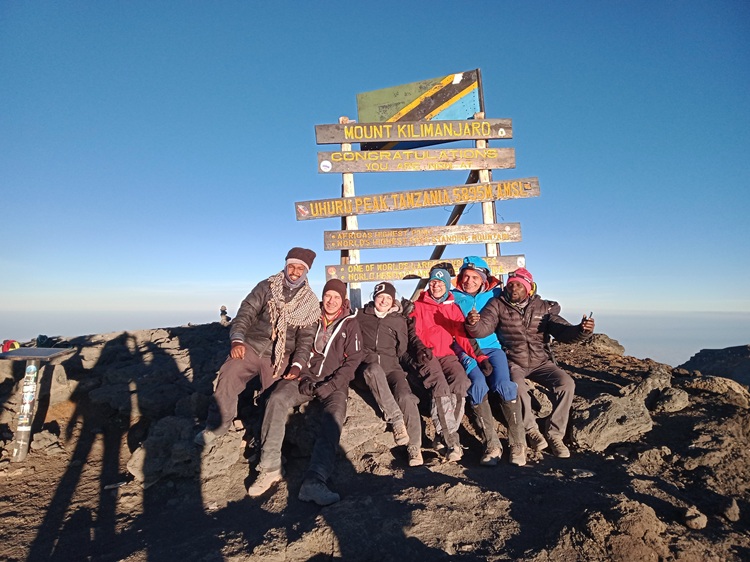
The summit push begins in the freezing darkness around midnight. You will move upward in a slow, rhythmic "pole pole" pace, following the light of your headlamp. This is a massive mental and physical challenge. The trail is steep scree, and you will navigate between the Rebmann and Ratzel glaciers. Reaching Stella Point (5,756 meters) on the crater rim at sunrise is a moment of pure emotion and relief. The light of the sun over the African plains provides a final boost of energy. From Stella Point, the trail levels out for the final 45-minute walk along the snow-covered crater rim to Uhuru Peak, the highest point in Africa.
After celebrating at the summit and taking photos with the famous sign, the long descent begins. You will "ski" down the loose scree back to Barafu Camp for a short rest and some food. The descent continues down the Mweka Route, dropping through the alpine desert and moorland into the upper forest. This is a punishing day for the knees, as you descend nearly 2,800 meters. By the time you reach Mweka Camp, the air is thick with oxygen and the temperature is warm. You will have been trekking for over 12 hours. The sense of achievement is overwhelming, and you will sleep more deeply than you have in a week.
Day 9: Mweka Camp to Mweka Gate
- Starting Point: Mweka Camp (3,100 meters)
- Ending Point: Mweka Gate (1,640 meters)
- Elevation Loss: 1,460 meters
- Approximate Distance: 10 kilometers
- Estimated Hiking Time: 3–4 hours
The final morning on the mountain is a relaxed walk through the lush rainforest to the Mweka Gate. After the barren and frozen world of the summit, the green trees and singing birds are a beautiful change. The trail is wide and well-trodden, passing through giant bamboo and ancient forest. You will likely see monkeys and a variety of flowers as you descend. This is a time to reflect on the nine days you have spent on the mountain and to celebrate with your crew. Your body will feel increasingly strong as the oxygen levels rise with every step you take toward the gate.
At the Mweka Gate, you will sign out of the park for the last time and receive your hard-earned certificates. This is also the traditional time for the tipping ceremony, where you thank your guides, porters, and cooks for their incredible support. They have been your family for the last nine days, and their expertise is the reason for your success. From the gate, you will be driven back to your hotel for a long-awaited hot shower and a celebratory dinner. The 9-day Lemosho Route luxury tour is a life-changing expedition that offers the best possible experience of Mount Kilimanjaro from start to finish.
What's Included
Inclusions
- Professional, licensed English-speaking mountain guides
- Qualified mountain chef and dedicated kitchen crew
- Full team of porters to carry all equipment and luggage
- Luxury walk-in mountain tents with comfortable mattresses
- Large, heated dining tents with tables and chairs
- Three freshly prepared hot meals per day plus snacks
- Filtered and purified drinking water provided daily
- All Kilimanjaro National Park entry and camping fees
- Official park rescue and environmental fees
- Medical equipment including oxygen and pulse oximeters
- Private portable toilets at every camp
- Transfers to the gate and back to the hotel
Exclusions
- International and domestic airfare
- Tanzanian entry visa fees
- Mandatory travel and high-altitude medical insurance
- Personal trekking gear and specialized clothing
- Tips for the mountain crew (Guides, Porters, Cooks)
- Hotel accommodation before and after the trek
- Personal medications and first-aid items
- Alcoholic beverages and bottled sodas
- Laundry and other personal hotel services
You Might Also Like
5-Day Marangu Route Luxury Kilimanjaro Climbing Tour
8-Day Lemosho Route Luxury Kilimanjaro Climbing Tour