Tour Overview
The 8-day Northern Circuit Route luxury Kilimanjaro climb is the newest and longest path to the summit, offering the most comprehensive experience of the mountain's diverse ecosystems. Because this route traverses the remote northern slopes, it provides a 360-degree circumnavigation of the Kibo massif, making it the most scenic journey available. This itinerary is specifically designed for trekkers who want the highest possible success rate. By spending eight days on the mountain, you allow your body the maximum time to adapt to the altitude, following the "climb high, sleep low" principle more effectively than on any other route. The Northern Circuit is essentially an extension of the Lemosho Route, but instead of crossing the southern circuit, it heads north into a wilderness that few climbers ever see.
This expedition begins at the Londorossi Gate on the western side of the mountain and moves through the pristine montane rainforest. As you ascend, the trail leads onto the Shira Plateau before veering away from the more crowded trails and heading toward the northern side. The northern slopes are characterized by their solitude, quiet camps, and expansive views across the plains of Kenya. The terrain varies from lush forests and high-altitude moorland to the stark, volcanic desert of the north. One of the primary highlights is the trek across the Buffalo Ridge and through the northern valleys, where you can experience the mountain in its most natural state.
For those seeking a luxury experience, this 8-day Northern Circuit trek includes high-end tented accommodation and a professional mountain crew dedicated to your comfort and safety. You will sleep in spacious, walk-in tents and enjoy nutritious, chef-prepared meals in a dedicated dining area. The challenge level is high due to the distance and duration, yet the physical strain is mitigated by the gradual ascent profile. This route is perfect for those who want to avoid the crowds, maximize their acclimatization, and see every side of the highest freestanding mountain in the world. Practical expectations include remote camping, variable weather, and the ultimate reward of standing on Uhuru Peak at 5,895 meters with a body that has been perfectly prepared for the altitude.
Tour Snapshot
- Route Name: Northern Circuit Route
- Duration: 8 days / 7 nights
- Starting Altitude: 2,250 meters (7,382 feet)
- Summit Altitude: 5,895 meters (19,341 feet)
- Total Trekking Distance: Approximately 98 kilometers (61 miles)
- Highest Point Reached: Uhuru Peak (5,895 meters)
- Difficulty Level: High (Due to distance) / Moderate (Due to acclimatization)
- Accommodation Type: Luxury Tented Camping
- Success Factors: Longest acclimatization window and 360-degree traverse
- Best Seasons: June to October and January to March
- Typical Daily Trekking Hours: 5 to 7 hours (Summit day is 12 to 15 hours)
Route Difficulty
The 8-day Northern Circuit is physically demanding due to the overall distance. However, the daily elevation gains are more manageable than shorter routes. It is suitable for fit hikers who prefer a gradual climb.
Weather and Conditions
Expect tropical heat in the forest and sub-zero temperatures at the summit. The northern side is often drier than the south, but wind can be a significant factor on the exposed northern traverse.
Acclimatization Advantage
This route offers the best acclimatization on Kilimanjaro. The extended duration and the crossing of the high-altitude Shira Plateau and Buffalo Ridge stimulate optimal red blood cell production.
Trekking Scenery
You will see the mountain from every angle. Highlights include the Shira Plateau, the northern slopes looking into Kenya, the jagged Mawenzi Peak, and the massive glaciers of Kibo.
8-Day Northern Circuit Route Luxury Kilimanjaro Climb: Day-by-Day Itinerary
Day 1: Londorossi Gate to Mti Mkubwa
- Starting Point: Londorossi Gate (2,250 meters)
- Ending Point: Mti Mkubwa (2,650 meters)
- Elevation Gain: 400 meters
- Approximate Distance: 7 kilometers
- Estimated Hiking Time: 3–4 hours
The expedition begins with a drive to the western side of the mountain to the Londorossi Gate. After completing the mandatory registration with the Kilimanjaro National Park authorities, a short drive on a rugged 4WD track leads to the Lemosho Glades where the trek commences. You immediately enter the lush, undisturbed montane rainforest. This western side is much quieter than the southern gates, and the forest is vibrant with life. You will walk on a winding path through giant trees draped in moss and ferns. This zone is the most likely place to spot Blue monkeys or the striking black-and-white Colobus monkeys watching from the high canopy.
The first day is a gentle introduction to the mountain, with a manageable incline and a relatively short distance. Your mountain crew will have already moved ahead to set up the luxury camp at Mti Mkubwa, or "Big Tree." This camp is nestled in a clearing within the forest, providing a sheltered and atmospheric environment for your first night. A warm wash and a multi-course dinner will be waiting for you. The humidity is high in the forest, and the air is filled with the sounds of the jungle. This evening is about settling into the mountain rhythm and preparing for the transition to the Shira Plateau the following day.
Day 2: Mti Mkubwa to Shira 2 Camp
- Starting Point: Mti Mkubwa (2,650 meters)
- Ending Point: Shira 2 Camp (3,850 meters)
- Elevation Gain: 1,200 meters
- Approximate Distance: 14 kilometers
- Estimated Hiking Time: 7–8 hours
The second day is a significant climb as you leave the rainforest and ascend onto the Shira Plateau. The trail becomes steeper and more rocky as it winds through the heath and moorland zone. You will pass through giant heathers and shrubs that can reach several meters in height. As you gain elevation, the trees disappear entirely, and the views open up to show the vastness of the western slopes. This is a tough day of climbing, as you gain over 1,000 meters of altitude. The air becomes drier and the temperature begins to drop, making your layering system vital as you reach the open plateau.
Upon reaching the Shira Plateau, the terrain levels out significantly. You will cross the plateau toward Shira 2 Camp, passing through a volcanic environment of ancient lava flows and unique high-altitude plants like the giant groundsels. Shira 2 Camp is located in a beautiful, open area with views of the sunset over the distant clouds and the summit of Kibo ahead. This is your first night sleeping at a high altitude of 3,850 meters. The move from the forest to this height is a major step in your acclimatization. Resting and hydrating at this camp is critical, as your body begins the complex process of adapting to the thinner air.
Day 3: Shira 2 Camp to Moir Hut
- Starting Point: Shira 2 Camp (3,850 meters)
- Ending Point: Moir Hut (4,200 meters)
- Elevation Gain: 350 meters
- Approximate Distance: 7 kilometers
- Estimated Hiking Time: 3–4 hours
On day three, you continue your journey across the Shira Plateau, but instead of heading toward the southern circuit like most routes, you turn toward the north. The trail leads toward the "Shira Cathedral," a massive rock buttress that you can opt to climb for spectacular views. The vegetation becomes sparser as you enter the alpine desert zone. The walk today is relatively short, which is a strategic choice in the 8-day Northern Circuit Route luxury Kilimanjaro climb. Arriving at Moir Hut by early afternoon allows your body time to process the jump in elevation to 4,200 meters without overexertion.
Moir Hut is a secluded camp located in a high valley surrounded by jagged rock peaks. This area is far less visited and offers a quiet, rugged beauty. After a hot lunch, your guides will take you on an acclimatization hike into the Lent Hills. This hike can take you to 4,300 or 4,400 meters before you return to the camp to sleep. This follows the "climb high, sleep low" rule perfectly. The air at Moir Hut is thin and cold, and the wind often howls through the rocks. The physiological benefit of staying here is immense, as it prepares you for the long traverse across the northern slopes that begins tomorrow.
Day 4: Moir Hut to Buffalo Camp
- Starting Point: Moir Hut (4,200 meters)
- Ending Point: Buffalo Camp (4,020 meters)
- Elevation Gain/Loss: Net loss of 180 meters after crossing several ridges
- Approximate Distance: 12 kilometers
- Estimated Hiking Time: 5–7 hours
This day marks the beginning of the true Northern Circuit experience. You leave the main trail behind and traverse the northern slopes of Kibo. The trail crosses a series of ridges and valleys in a remote and quiet wilderness. You will see very few other trekking groups in this section of the mountain. The terrain is a stark alpine desert, characterized by volcanic scree and scattered boulders. The views to the north across the Kenyan plains are expansive and stunning. This traverse involves several steep climbs and descents, providing excellent acclimatization as you remain consistently around the 4,000-meter mark.
Buffalo Camp, also known as Pofu Camp, is located in a spectacular position with views into the valleys below. The camp is named after the buffalo that occasionally wander up to these heights from the lower plains. The solitude of this camp is a highlight for many, offering a sense of connection with the mountain that is hard to find on the busier southern routes. Your luxury tents will be ready, and the evening will be spent enjoying a warm meal while watching the light change on the northern face of Kibo. The air is dry and cold, and the wind can be strong, but the sense of achievement from traversing this remote terrain is significant.
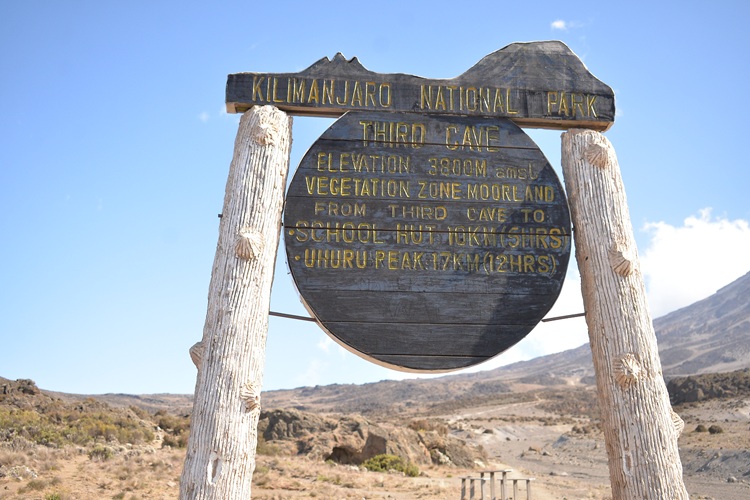
Day 5: Buffalo Camp to Third Cave
- Starting Point: Buffalo Camp (4,020 meters)
- Ending Point: Third Cave (3,800 meters)
- Elevation Loss: 220 meters
- Approximate Distance: 8 kilometers
- Estimated Hiking Time: 5–7 hours
The journey continues across the northern slopes as you head toward the eastern side of the mountain. The trail crosses several more valleys and ridges, offering a variety of volcanic scenery. You will pass through areas with unique high-altitude flora and rocky outcrops. The views continue to be dominated by the plains of Kenya to the north and the jagged peaks of Mawenzi to the east. This section of the trek is relatively gentle in terms of elevation gain, focusing more on the horizontal distance across the mountain. The slow pace is designed to maintain your energy levels as you prepare for the move to the high camp.
Arriving at Third Cave camp in the late afternoon, you have successfully completed the northern traverse. This camp is located in a sheltered area near several natural caves. At 3,800 meters, the air is slightly thicker than the previous nights, which helps with physical recovery. Your guides will conduct another health check to ensure you are adapting well to the altitude. The silence of the northern side remains a feature of this camp. You will spend the evening in the dining tent, enjoying a multi-course meal and discussing the upcoming climb to School Hut, which will be the final staging ground for your summit attempt.
Day 6: Third Cave to School Hut
- Starting Point: Third Cave (3,800 meters)
- Ending Point: School Hut (4,800 meters)
- Elevation Gain: 1,000 meters
- Approximate Distance: 6 kilometers
- Estimated Hiking Time: 4–5 hours
The trail from Third Cave to School Hut involves a steady and steep climb into the alpine desert. You leave the last of the vegetation behind as you ascend the northern flank of the mountain toward the base of the summit cone. The terrain is composed of volcanic scree and large boulders, and the wind can be powerful as you move higher. This is a shorter day in terms of distance, but the elevation gain is significant. School Hut is a functional stone building located in a rocky and exposed area at 4,800 meters. This is the base for your summit attempt, and the air here is incredibly thin.
Arrival at School Hut by midday is critical for rest. You will have an early lunch and then be encouraged to sleep as much as possible in the afternoon. The summit attempt usually begins around midnight, so the hours between 6:00 PM and 11:00 PM are your primary window for recovery. Your guides will perform a final health check and help you organize your summit layers and hydration systems. The atmosphere is quiet and intense, as the realization of the upcoming 1,000-meter vertical climb sinks in. The luxury support crew will ensure you have a high-energy meal and that all your gear is ready for the freezing night ahead.
Day 7: Summit Day: School Hut to Uhuru Peak to Mweka Camp
- Starting Point: School Hut (4,800 meters)
- Ending Point: Uhuru Peak (5,895 meters) then down to Mweka Camp (3,100 meters)
- Elevation Gain: 1,095 meters
- Elevation Loss: 2,795 meters
- Approximate Distance: 15 kilometers
- Estimated Hiking Time: 12–15 hours
The summit push begins in the freezing darkness around midnight. This is the ultimate test of your endurance. You will move upward in a slow, rhythmic "pole pole" pace, following the light of your headlamp. The trail consists of steep volcanic scree, which can be slippery and exhausting. You will reach the crater rim at Gilman's Point (5,685 meters) as the first light of dawn begins to appear. The sight of the sun rising over the Mawenzi Peak is a powerful moment that provides the energy needed for the final walk along the rim. You will pass Stella Point and finally reach Uhuru Peak, the highest point in Africa at 5,895 meters.
After celebrating your achievement at the summit and taking photos of the glaciers and the crater, the long descent begins. You will retrace your steps to School Hut for a short rest and some food, and then continue the descent down the Mweka Route. This involves dropping through the alpine desert and moorland into the upper forest zone. By the time you reach Mweka Camp in the late afternoon, you will have been trekking for over 12 hours. The return to the thicker air and the warmth of the forest at 3,100 meters is a massive relief. You will sleep more deeply than you have in a week, knowing the hardest part of the mission is complete.
Day 8: Mweka Camp to Mweka Gate Back to Moshi
- Starting Point: Mweka Camp (3,100 meters)
- Ending Point: Mweka Gate (1,640 meters)
- Elevation Loss: 1,460 meters
- Approximate Distance: 10 kilometers
- Estimated Hiking Time: 3–4 hours
The final morning on the mountain is a relaxed descent through the tropical rainforest to the Mweka Gate. After the barren, frozen world of the summit, the lush greenery, singing birds, and warm air feel incredible. The trail is well-defined and winds through beautiful sections of bamboo and massive forest trees. This walk is a time for reflection on the extraordinary 360-degree journey you have just completed. Your legs will likely be tired, but the knowledge that a hot shower and a soft bed are only a few hours away provides plenty of motivation. You will pass other trekkers starting their journeys, and there is a shared sense of accomplishment among those going down.
At the Mweka Gate, you will sign out of the park for the last time. This is where you receive your hard-earned certificates: gold for reaching Uhuru Peak and green for those who reached Gilman's Point. After a final meal and a traditional farewell ceremony with your mountain crew, a vehicle will transport you back to your hotel. This is the time to say goodbye to the guides, porters, and cooks who have been your support system for the past eight days. The transition back to civilization is a reflective period, as you realize the magnitude of what you have accomplished on the longest and most scenic route to the roof of Africa.
What's Included
Inclusions
- Professional English-speaking guides
- Qualified mountain chef and kitchen team
- Large team of porters for all equipment
- Luxury walk-in tents with insulated mattresses
- Heated dining tents with tables and chairs
- Three hot meals daily and high-energy snacks
- Filtered and purified drinking water
- National Park entry and camping fees
- Park rescue and environmental fees
- Emergency oxygen and pulse oximeters
- Private portable toilets for camp use
- Transfers to Londorossi and from Mweka Gate
Exclusions
- International and domestic airfare
- Tanzanian entry visa fees
- Mandatory travel and medical insurance
- Personal trekking gear and clothing
- Tips for the mountain crew
- Hotel stay before and after the climb
- Personal medicines and toiletries
- Alcoholic beverages and bottled sodas
- Laundry and other personal hotel services
You Might Also Like
7-Day Umbwe Route Luxury Kilimanjaro Climbing Tour
6-Day Machame Route Luxury Kilimanjaro Climbing Tour