Tour Overview
An 8-day Lemosho Route luxury Kilimanjaro climbing tour is widely considered the premium choice for trekkers who prioritize safety, comfort, and the highest possible chance of reaching Uhuru Peak. By extending the journey to eight days, this itinerary provides the most gradual altitude progression available on the mountain. The Lemosho Route starts on the western flank of Kilimanjaro at the Londorossi Gate, a remote and quiet entrance that allows climbers to experience a true wilderness environment before joining the busier southern circuit. This route is famous for its panoramic views and the unique opportunity to cross the entire Shira Plateau, one of the highest plateaus on earth, from west to east.
The primary advantage of the 8-day Lemosho Route luxury climb is the addition of Shira 1 Camp. While shorter versions of this route often bypass this camp or move through the first few days quickly, the eight-day schedule splits the initial ascent into manageable stages. This slow gain in elevation during the first three days is critical for blood chemistry adaptation. The route traverses the five distinct ecological zones of Kilimanjaro, including the undisturbed rainforest of the western slopes, the heath and moorland, the alpine desert, and finally the arctic summit. This diversity ensures that the trek remains visually engaging throughout the week, reducing the mental fatigue that can sometimes accompany long mountain expeditions.
For the luxury traveler, this 8-day itinerary provides a sophisticated support system in a rugged landscape. You are accompanied by a large team of professional guides, porters, and a dedicated mountain chef. Accommodation consists of high-quality, walk-in tents featuring thick, insulated sleeping mats and seasonal sleeping bags. The extra day on the mountain is not just about physical success; it allows for a more relaxed pace, giving you time to appreciate the rare flora and fauna, such as the elusive black-and-white colobus monkeys and the endemic giant groundsels. This route is best suited for those who want a quiet, scenic, and responsible ascent of Africa’s highest peak, backed by the best acclimatization profile the mountain can offer.
Tour Snapshot
- Route Name: Lemosho Route
- Duration: 8 days / 7 nights
- Starting Altitude: 2,100 meters (6,890 feet)
- Summit Altitude: 5,895 meters (19,341 feet)
- Total Trekking Distance: Approximately 70 kilometers (43.5 miles)
- Highest Point Reached: Uhuru Peak (5,895 meters)
- Difficulty Level: Moderate (Best for acclimatization)
- Accommodation Type: Luxury Tented Camping
- Success Factors: 8-day pacing and superior "climb high, sleep low" opportunities
- Best Seasons: January to March and June to October
- Typical Daily Trekking Hours: 4 to 6 hours (Summit day is 12 to 15 hours)
Physiological Nuances of the 8-Day Climb
The success of the 8-day Lemosho Route luxury climb is rooted in the science of high-altitude physiology. When you ascend too quickly, your body does not have enough time to increase the concentration of red blood cells needed to transport oxygen in a thin atmosphere. This can lead to Acute Mountain Sickness (AMS). By spending eight days on the mountain, including the extra nights at Shira 1 and Karanga, you are allowing your body to adapt at a natural pace. This gradual approach minimizes the risk of severe headaches, nausea, and pulmonary issues.
During the trek, your body undergoes several adaptations. Your breathing rate increases even at rest, and your kidneys adjust the acidity of your blood to help the oxygen-carrying process. The 8-day schedule provides the "buffer" days that are often needed if a climber feels slightly unwell. In a 6-day or 7-day trek, there is little room for error; if you feel sick, you often have to descend. In an 8-day trek, a slow day at a mid-altitude camp can often resolve minor symptoms, allowing you to continue safely to the summit. This is why the 8-day Lemosho Route has the highest success statistics on the mountain.
8-Day Lemosho Route Luxury Kilimanjaro Climbing Tour: Day-by-Day Itinerary
Day 1: Londorossi Gate to Mti Mkubwa
- Starting Point: Londorossi Gate (2,100 meters)
- Ending Point: Mti Mkubwa (2,650 meters)
- Elevation Gain: 550 meters
- Approximate Distance: 7 kilometers
- Estimated Hiking Time: 3–4 hours
The journey begins with a drive to the western side of the mountain, passing through local villages before reaching the Londorossi Gate. After the mandatory park registration, a further short drive takes you to the Lemosho Glades where the trailhead begins. The path leads immediately into a thick, vibrant rainforest. This side of Kilimanjaro receives significant rainfall, which supports a lush ecosystem far removed from the dust of the lower slopes. The trail is often quiet, as fewer climbers start from this side, allowing you to hear the rustle of the canopy and the calls of the forest birds. The climb today is gentle, following a winding path through giant ferns and ancient trees.
You will likely encounter various primates during this first stage, including Blue monkeys and the striking black-and-white Colobus monkeys. The pace is slow and deliberate, designed to help your body start the long process of adjusting to the mountain's environment. Upon arrival at Mti Mkubwa, or "Big Tree" camp, your luxury tented setup will already be prepared. The camp is nestled in a clearing within the forest, providing a sheltered and atmospheric location for your first night on the mountain. After a warm wash and a multi-course dinner, you will have your first evening briefing with your guides to discuss the transition to the Shira Plateau the following day.
Day 2: Mti Mkubwa to Shira 1 Camp
- Starting Point: Mti Mkubwa (2,650 meters)
- Ending Point: Shira 1 Camp (3,500 meters)
- Elevation Gain: 850 meters
- Approximate Distance: 8 kilometers
- Estimated Hiking Time: 5–6 hours
On the second day, the forest begins to thin as you climb toward the Shira Ridge. This is a significant day for elevation gain, and the trail becomes steeper and more rocky. You will leave the dense canopy behind and enter the heath and moorland zone, where the vegetation consists of hardy shrubs and the first of the giant heathers. As you crest the Shira Ridge, the view opens up spectacularly, revealing the vast Shira Plateau ahead and the peaks of Kibo in the distance. The change in air quality is noticeable here; it becomes drier and much cooler as you move away from the moisture-trapping rainforest.
Shira 1 Camp is situated on the western edge of the plateau. In the 8-day Lemosho Route luxury trek, staying here instead of pushing directly to Shira 2 is a major advantage. It allows you to sleep at 3,500 meters, a critical mid-point that helps prevent the onset of altitude-related symptoms. The camp offers stunning views of the sunset over the valley below and the glaciers of Kibo above. This evening, you might notice your first minor physiological changes, such as a slightly increased respiratory rate. Staying at Shira 1 provides your body with the necessary time to consolidate its acclimatization before crossing the plateau the next day.
Day 3: Shira 1 Camp to Shira 2 Camp
- Starting Point: Shira 1 Camp (3,500 meters)
- Ending Point: Shira 2 Camp (3,850 meters)
- Elevation Gain: 350 meters
- Approximate Distance: 7 kilometers
- Estimated Hiking Time: 3–4 hours
This day is a gentle traverse across the Shira Plateau. It is one of the most scenic days of the trek, as you walk across the ancient, lava-filled caldera. The terrain is relatively flat, making for an easy day of hiking that focuses on active recovery. You will pass the "Shira Cathedral," a massive rock buttress that you can opt to climb for even better views of the surrounding landscape. The vegetation in this zone is fascinating, with the appearance of the unique giant lobelias that have evolved to survive the extreme temperature swings of the plateau. The air is crisp, and on clear days, the visibility extends for dozens of kilometers toward Mount Meru.
Arriving at Shira 2 Camp in the early afternoon allows for a long period of rest. This camp is a hub where several routes merge, and it sits at a slightly higher elevation of 3,850 meters. The luxury of the 8-day schedule means you are not rushed, and you can spend the afternoon hydrating and enjoying the communal atmosphere of the camp. Your guides will conduct another health check using a pulse oximeter. The night at Shira 2 is typically very cold, as the plateau is exposed to the wind. However, the extra time spent at this altitude over the last two days significantly strengthens your physiological foundation for the upcoming trek to the Lava Tower.
Day 4: Shira 2 Camp to Barranco Camp via Lava Tower
- Starting Point: Shira 2 Camp (3,850 meters)
- Ending Point: Barranco Camp (3,960 meters)
- Elevation Gain/Loss: Climb to 4,630 meters (Lava Tower), then descend to 3,960 meters
- Approximate Distance: 10 kilometers
- Estimated Hiking Time: 6–8 hours
Day four is the "acclimatization peak" of the journey. You move out of the moorland and into the alpine desert, heading toward the Lava Tower. This volcanic feature stands as a landmark on the southern circuit. The trail is a long, steady uphill through a landscape of volcanic rock and gray sand. Reaching the base of the tower at 4,630 meters is a significant challenge, and you will likely feel the thin air. You will stop here for a hot lunch prepared by your crew. This exposure to high altitude followed by a descent is the most effective way to stimulate the production of red blood cells, which are essential for the summit push.
The afternoon involves a descent of nearly 700 meters into the Barranco Valley. This part of the trek is visually rewarding, as you descend into a valley filled with thousands of giant groundsels. The microclimate of the valley allows these plants to thrive, creating a prehistoric-looking garden beneath the massive cliffs of the Barranco Wall. Barranco Camp is arguably the most beautiful campsite on the mountain, tucked under the southern glaciers of Kibo. Despite the physical exertion of the day, you will likely feel much better once you reach the lower elevation of the camp. This "climb high, sleep low" cycle is a core component of the success of the 8-day Lemosho itinerary.
Day 5: Barranco Camp to Karanga Camp
- Starting Point: Barranco Camp (3,960 meters)
- Ending Point: Karanga Camp (3,995 meters)
- Elevation Gain: 35 meters (after the 257m climb of the wall)
- Approximate Distance: 5 kilometers
- Estimated Hiking Time: 4–5 hours
The day begins with the ascent of the Great Barranco Wall. While it looks like a sheer rock face from the camp, the path is actually a series of manageable ledges. There is no technical climbing involved, but you will need to use your hands for balance in several places, including the famous "Kissing Rock." Reaching the top of the wall is a highlight for many, offering a sense of accomplishment and a unique perspective on the glaciers above. The trail then winds across the southern face of the mountain, crossing several small valleys and ridges. This is the alpine desert zone, where the wind can be strong and the environment is increasingly barren.
You will descend into the Karanga Valley before a final steep climb up to Karanga Camp. In the 8-day luxury trek, this is a dedicated overnight stop, whereas shorter routes often continue straight to the high camp. Arriving at Karanga in the early afternoon gives you another critical window for rest. Your body has now spent several nights around the 4,000-meter mark, which is ideal preparation for the final 4,600-meter high camp. You will have a hot lunch at camp and can spend the afternoon resting your legs for the steep days ahead. The view of the Mawenzi Peak from Karanga is often spectacular during the golden hour of sunset.
Day 6: Karanga Camp to Barafu Camp
- Starting Point: Karanga Camp (3,995 meters)
- Ending Point: Barafu Camp (4,673 meters)
- Elevation Gain: 678 meters
- Approximate Distance: 4 kilometers
- Estimated Hiking Time: 3–4 hours
The walk from Karanga to Barafu is a steady, slow climb through the alpine desert. The vegetation has almost entirely disappeared, leaving only rock and dust. You are heading toward the Barafu Ridge, a narrow spine of rock that serves as the base for the summit attempt. The trail is well-defined but the altitude makes the incline feel much steeper than it is. As you approach Barafu Camp, the wind often picks up, and the temperature drops. The word "Barafu" means "ice," and the camp is aptly named for its cold, exposed position. Kibo Peak towers directly above you, appearing massive and intimidating as you realize you will be climbing its summit cone in just a few hours.
Arrival at Barafu Camp is usually by midday, allowing for a full afternoon of preparation. This is the most important rest period of the entire trek. Your luxury crew will ensure your tents are as comfortable as possible on the rocky ground. You will be served an early dinner and encouraged to sleep by 6:00 PM or 7:00 PM. The air is very thin here, and you may find it difficult to sleep deeply. However, the 8-day schedule means your body is as well-prepared as it can possibly be. Your guides will help you organize your summit layers and ensure your hydration systems are ready, with water bottles insulated to prevent freezing during the night.
Day 7: Barafu Camp to Uhuru Peak to Mweka Camp
- Starting Point: Barafu Camp (4,673 meters)
- Ending Point: Uhuru Peak (5,895 meters) then back to Mweka Camp (3,100 meters)
- Elevation Gain: 1,222 meters
- Elevation Loss: 2,795 meters
- Approximate Distance: 15 kilometers
- Estimated Hiking Time: 12–15 hours
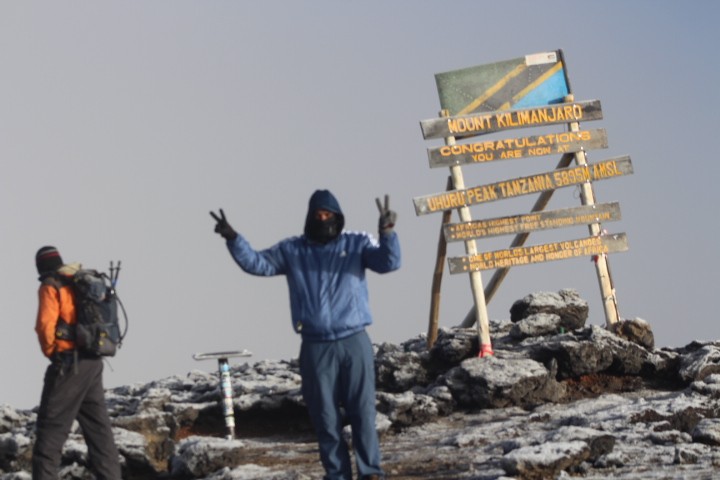
The summit push begins around midnight. This is the most mentally and physically taxing part of the 8-day Lemosho Route luxury climb. In the freezing darkness, you move upward in a slow, rhythmic "pole pole" pace. The trail consists of loose volcanic scree, which can be slippery and exhausting. You will pass between the Rebmann and Ratzel glaciers, reaching the crater rim at Stella Point (5,756 meters) around sunrise. The psychological boost of the first light of day is immense. From Stella Point, it is a further 45-minute walk along the snow-covered crater rim to Uhuru Peak. At 5,895 meters, you stand at the highest point in Africa, surrounded by the mountain’s ancient glaciers.
After a brief stay at the summit to celebrate and take photos, the descent begins. You will retrace your steps back to Barafu Camp, where you can rest for an hour and have some food. The descent continues down a different path through the moorland and into the upper forest zone to reach Mweka Camp. This is a very long day, involving a massive drop in elevation. While the increasing oxygen levels make you feel more energetic, the descent is hard on the knees and requires focus. By the time you reach Mweka Camp, you will have completed the most significant challenge of the expedition. The air at 3,100 meters is thick and warm, ensuring a deep and restorative sleep.
Day 8: Mweka Camp to Mweka Gate
- Starting Point: Mweka Camp (3,100 meters)
- Ending Point: Mweka Gate (1,640 meters)
- Elevation Loss: 1,460 meters
- Approximate Distance: 10 kilometers
- Estimated Hiking Time: 3–4 hours
The final day of the 8-day Lemosho Route luxury trek is a pleasant walk through the rainforest. The environment is a total contrast to the frozen world of the summit. You will descend through the giant bamboo zone and see a variety of wildflowers and butterflies. The trail can be slippery, especially in the lower forest, so care is still needed. This is a time for celebration with your mountain crew. You will likely hear them singing the "Kilimanjaro Song" as you approach the gate. The sense of camaraderie and shared achievement is a powerful conclusion to the journey.
At the Mweka Gate, you will sign out of the park for the last time and receive your summit certificates. This is also the traditional time for the tipping ceremony, where you thank your guides, porters, and cooks for their incredible support over the last eight days. A vehicle will be waiting to take you back to your hotel for a long-awaited hot shower and a celebratory dinner. The 8-day Lemosho itinerary is more than just a climb; it is an immersive experience that allows you to see the very best of Kilimanjaro while giving your body every possible advantage to succeed on its highest peak.
What's Included
Inclusions
- Professional, licensed English-speaking mountain guides
- Specialized mountain chef and kitchen assistants
- Large team of porters for equipment and luggage
- Luxury walk-in tents with comfortable sleeping mats
- Large, insulated dining tents with chairs and tables
- Three freshly prepared hot meals daily
- High-energy snacks and afternoon tea
- Treated and filtered drinking water provided daily
- All Kilimanjaro National Park entry and camping fees
- Official park rescue and environmental fees
- Emergency oxygen cylinders and pulse oximeters
- Private portable chemical toilets for camp use
- Transportation to and from the Londorossi and Mweka gates
Exclusions
- International and domestic airfare to Kilimanjaro (JRO)
- Tanzanian entry visa for international visitors
- Travel and high-altitude medical insurance (mandatory)
- Standard tips for the guides, porters, and cooks
- Personal trekking gear and specialized summit clothing
- Hotel accommodation before and after the 8-day climb
- Personal medications and first-aid supplies
- Alcoholic beverages and bottled sodas
- Laundry services at the hotel
You Might Also Like
6-Day Rongai Route Luxury Kilimanjaro Climbing Tour
6-Day Umbwe Route Luxury Kilimanjaro Climbing Tour