Tour Overview
A 7-day Lemosho Route luxury Kilimanjaro climbing tour offers perhaps the most comprehensive experience of Mount Kilimanjaro, starting from the quiet, western side of the mountain. The Lemosho Route is widely regarded by mountain experts as the most scenic and rewarding path to the summit, providing a remote wilderness start that eventually joins the more popular southern circuit. This specific itinerary is prized for its superior acclimatization profile. By beginning at a higher starting point but moving slowly through the first few days, your body has an exceptional opportunity to adjust to the decreasing oxygen levels before the final summit push.
The journey begins at the Londorossi Gate, where the trek leads through the pristine and undisturbed rainforest of the western slopes. Unlike the busier eastern routes, Lemosho provides a higher chance of spotting wildlife, including the rare black-and-white colobus monkeys and even signs of elephants in the lower forest glades. The route crosses the entire Shira Plateau from west to east in a relatively flat traverse, providing some of the most spectacular vistas of the Kibo massif. This 7-day version is a physically demanding trek, but it is strategically designed to follow the "climb high, sleep low" rule, particularly during the traverse to the Lava Tower and the descent into the Barranco Valley.
The 7-day Lemosho Route luxury trek is suitable for those who desire a more private and quiet start to their expedition. While the route eventually merges with the Machame trail, the first two days offer a sense of solitude that is hard to find elsewhere on the mountain. You will move through five distinct ecological zones, from the lush rainforest to the arctic desert of the summit. The challenge level is high, primarily due to the duration and the steep scramble of the Barranco Wall, yet the success rates remain among the highest of all routes. Practical expectations include sleeping in high-quality, walk-in tents, eating freshly prepared meals in a dedicated dining tent, and benefitting from the expertise of a professional mountain crew that prioritizes your safety and comfort throughout the 62-kilometer journey.
Tour Snapshot
- Route Name: Lemosho Route
- Duration: 7 days / 6 nights
- Starting Altitude: 2,100 meters (6,890 feet)
- Summit Altitude: 5,895 meters (19,341 feet)
- Total Trekking Distance: Approximately 70 kilometers (43 miles)
- Highest Point Reached: Uhuru Peak (5,895 meters)
- Difficulty Level: High (Due to duration and terrain)
- Accommodation Type: Luxury Tented Camping
- Success Factors: Excellent acclimatization and remote western approach
- Best Seasons: June to October and January to March
- Typical Daily Trekking Hours: 5 to 7 hours (Summit day is 12 to 15 hours)
Success Rates and Route Strategy
The Lemosho Route is widely recognized as having one of the highest success rates on Mount Kilimanjaro. This is primarily due to the duration of the trek and the excellent acclimatization profile. Starting from the west allows for a more gradual ascent through the first few days compared to the Machame or Marangu routes. The traverse across the Shira Plateau provides several days of activity at a relatively stable altitude, which is ideal for the body to adjust to the lower oxygen levels before the final steep push to the summit.
On a 7-day Lemosho Route luxury trek, the success rate is further improved by the professional medical monitoring provided by your guides. They perform twice-daily checks of your heart rate and blood oxygen levels, ensuring that any signs of altitude sickness are caught early. This data-driven approach, combined with the "pole pole" philosophy, means that most trekkers can safely manage the altitude. While no route guarantees a summit, the Lemosho path gives you the best possible physiological foundation to stand on Uhuru Peak.
Ecological Diversity and Scenery
Kilimanjaro is often described as "an island in the sky," and the Lemosho Route provides the best view of its diverse ecosystems. You begin in the Cultivation Zone, move through the Rainforest, enter the Heath and Moorland, traverse the Alpine Desert, and finally reach the Arctic Zone at the summit. The Western side of the mountain is particularly beautiful, with the Lemosho Glades offering a more pristine forest experience than other routes. The Shira Plateau, with its volcanic rock formations and unique high-altitude plants, is a highlight for many trekkers.
As you move along the Southern Circuit, you will see the Great Barranco Wall and the spectacular glaciers of Kibo, including the Heim and Kersten glaciers. The contrast between the lush, green forest at the start and the frozen, barren world of the summit is stark and awe-inspiring. The Lemosho Route is also excellent for photography, as the western approach provides different lighting and angles of the mountain than the more common southern paths. The 7-day schedule allows you enough time to truly observe these changes in the environment rather than rushing past them.
The Experience of Luxury Tented Camping
Choosing a luxury trek means that your comfort on the mountain is prioritized. While the environment is rugged, your daily life at camp is designed to be as comfortable as possible. You will sleep in high-quality, walk-in tents that are much larger and more durable than standard trekking tents. These are equipped with thick, insulated mattresses and warm sleeping bags, providing a solid foundation for a good night's rest. A dedicated dining tent with a table and chairs serves as your social hub, where you can share meals and discuss the day's events with your fellow trekkers.
The food on a 7-day Lemosho Route luxury trek is a significant part of the experience. A specialized mountain cook prepares fresh, hot meals three times a day, using high-quality ingredients. The menu is designed to be high in energy and easy to digest at altitude. You can expect a variety of dishes, including fresh fruit, vegetables, meats, and grains, all prepared in a hygienic kitchen tent. Purified drinking water is provided at every meal and for your daypack. This level of service allows you to focus entirely on your hike and your health, leaving the logistics and heavy lifting to your professional support crew.
7-Day Lemosho Route Luxury Kilimanjaro Climbing Tour: Day-by-Day Itinerary
Day 1: Londorossi Gate to Mti Mkubwa
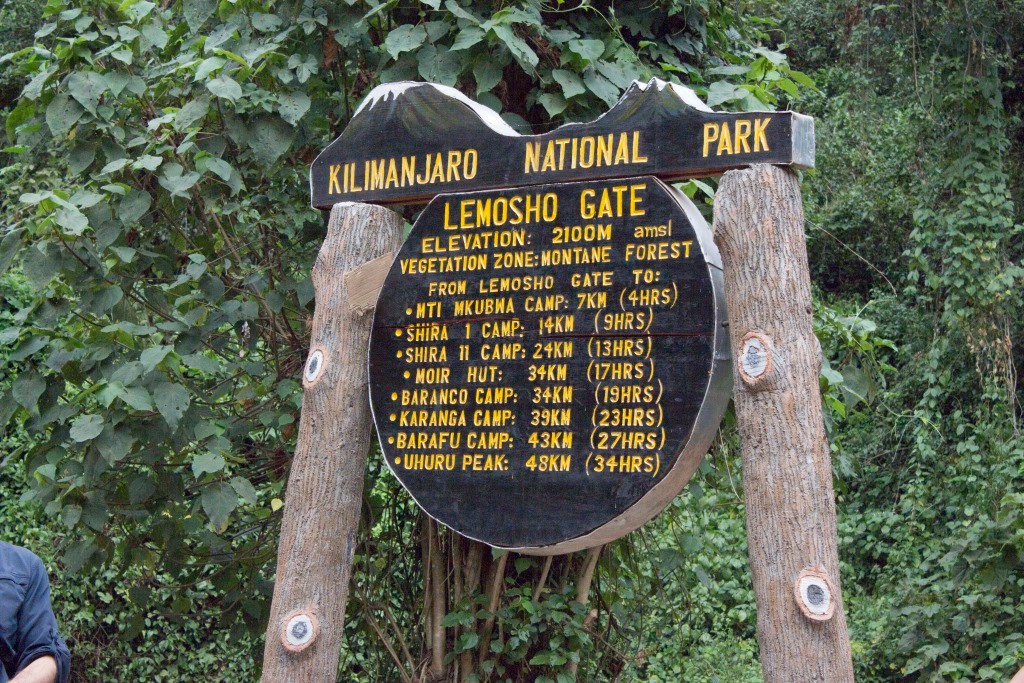
- Starting Point: Londorossi Gate (2,100 meters)
- Ending Point: Mti Mkubwa (2,650 meters)
- Elevation Gain: 550 meters
- Approximate Distance: 7 kilometers
- Estimated Hiking Time: 3–4 hours
The first day of the 7-day Lemosho Route luxury Kilimanjaro climbing tour begins with a drive to the Londorossi Gate for registration. Following this, a further drive on a rugged track takes you to the Lemosho Glades, where the actual trekking commences. You immediately enter the dense montane rainforest. This western side of the mountain is far less visited than the south, meaning the forest remains in a more natural, undisturbed state. The trail is often narrow and winds through ancient trees covered in thick moss and long strands of lichen. The air is cool and humid, and the canopy provides a deep shade that keeps the temperature pleasant even in the midday sun.
Your walk today is relatively short and serves as a gentle introduction to the mountain. The incline is steady but never overly steep. This is the best time to start your "pole pole" pace, allowing your lungs and legs to find a rhythm. Mti Mkubwa, which means "Big Tree" in Swahili, is your first camp. It is located in a clearing within the forest, and the sounds of the jungle provide a constant backdrop to the evening. Because this is a luxury trek, your tents will be set up by the time you arrive, and a warm wash and snack will be waiting. The first night in the forest is a time to disconnect and focus on the six days of climbing that lie ahead.
Day 2: Mti Mkubwa to Shira 2 Camp
- Starting Point: Mti Mkubwa (2,650 meters)
- Ending Point: Shira 2 Camp (3,840 meters)
- Elevation Gain: 1,190 meters
- Approximate Distance: 14 kilometers
- Estimated Hiking Time: 7–8 hours
This is a challenging day that involves a significant gain in altitude as you leave the rainforest and ascend onto the Shira Plateau. The trail climbs out of the trees and enters the heath and moorland zone. You will cross several streams and climb over a steep rocky ridge known as the Shira Ridge. The vegetation changes dramatically; the giant trees are replaced by shrubs like heather and the distinctive protea. The environment becomes much more open, offering the first expansive views of the western face of Kibo. The sun can be intense here, so sun protection is vital as the forest's shade is left behind.
As you cross the plateau toward Shira 2 Camp, you are walking on one of the highest plateaus on earth. This area was once a volcanic crater that has since filled with lava and eroded. The terrain is relatively flat once you are on the plateau, but the previous climb will have tired your legs. Shira 2 Camp is located in a stunning position that provides panoramic views of the mountain and the valley below. At 3,840 meters, you will likely start to feel the effects of the altitude. It is important to stay hydrated and move slowly. The evening at Shira 2 is often much colder than the previous night, signaling your entry into the high-altitude environment of the mountain.
Day 3: Shira 2 Camp to Barranco Camp
- Starting Point: Shira 2 Camp (3,840 meters)
- Ending Point: Barranco Camp (3,960 meters)
- Elevation Gain/Loss: Gain to 4,630 meters (Lava Tower), then descent to 3,960 meters
- Approximate Distance: 10 kilometers
- Estimated Hiking Time: 6–8 hours
Day three is essential for your acclimatization strategy. The path heads east across the high-altitude desert toward the Lava Tower, a massive volcanic rock formation. This part of the trek is a long, steady climb through a barren terrain of rock and sand. As you reach the base of the Lava Tower at 4,630 meters, you will be at an elevation nearly equivalent to your high camp. Many climbers experience mild altitude symptoms here, such as a slight headache or nausea. This is a normal part of the body's response to the thin air. You will have lunch at the tower, staying at this high point for about an hour to maximize the physiological benefits of the "climb high, sleep low" technique.
Following lunch, you begin a steep descent into the Barranco Valley. This descent is one of the most beautiful parts of the route, as you drop back into the moorland and pass through forests of giant senecios. These prehistoric-looking plants only grow at high altitudes and can live for hundreds of years. The valley is often filled with mist, creating a mysterious and atmospheric setting. By the time you reach Barranco Camp, you have descended nearly 700 meters from the day's peak at the Lava Tower. This descent allows your body to recover in the richer air, reinforcing the acclimatization process that will be crucial for the summit night later in the week.
Day 4: Barranco Camp to Karanga Camp
- Starting Point: Barranco Camp (3,960 meters)
- Ending Point: Karanga Camp (3,995 meters)
- Elevation Gain: 35 meters (net, following a 250m climb)
- Approximate Distance: 5 kilometers
- Estimated Hiking Time: 4–5 hours
The day begins with a climb up the Great Barranco Wall. This is often the most memorable part of the Lemosho Route. While it appears to be a vertical wall from the camp, it is actually a non-technical scramble. You will use your hands for balance in a few sections, but no climbing experience is necessary. The most famous part is the "Kissing Rock," where the path narrows against the rock face. Reaching the top of the wall provides a massive sense of accomplishment and offers some of the best views of the glaciers on the southern side of Kibo. From the top, the path continues across a series of ridges and valleys.
The trek then leads into the Karanga Valley, the last water point on the mountain. After descending into the valley, there is a short, steep climb to reach Karanga Camp. This is a shorter day of hiking, which is intentionally designed to allow for rest. Arriving at camp in the early afternoon means you have time to relax, enjoy a hot lunch, and let your body recover from the exertion of the Barranco Wall. This extra half-day of rest is a key component of the 7-day Lemosho Route luxury trek, ensuring that you arrive at the high camp the next day with as much energy as possible.
Day 5: Karanga Camp to Barafu Camp
- Starting Point: Karanga Camp (3,995 meters)
- Ending Point: Barafu Camp (4,673 meters)
- Elevation Gain: 678 meters
- Approximate Distance: 4 kilometers
- Estimated Hiking Time: 3–4 hours
The climb from Karanga to Barafu is a steady ascent through the alpine desert. The terrain becomes increasingly bleak and rocky as you leave the last of the vegetation behind. You will cross the Mweka descent trail and push upward toward the Barafu Ridge. This is the base camp for your summit attempt. The camp is situated on a narrow, rocky ridge that is highly exposed to the wind. The air here is very thin, and every movement requires more effort than at lower altitudes. Your crew will secure your tents on the rocky ground, and you will focus on preparing your gear for the upcoming night.
Since you arrive at Barafu in the early afternoon, you will be served an early dinner and encouraged to get as much sleep as possible. The summit attempt usually begins around midnight, so the hours between 6:00 PM and 11:00 PM are critical for rest. Your guide will perform a final health check and ensure that your summit clothing and hydration systems are ready. The atmosphere at Barafu is one of quiet focus. You are now at an altitude where the body is in a state of deterioration, so staying still and staying warm are the priorities before the most difficult physical challenge of your life begins.
Day 6: Summit Day: Barafu Camp to Uhuru Peak to Mweka Camp
- Starting Point: Barafu Camp (4,673 meters)
- Ending Point: Uhuru Peak (5,895 meters) then back to Mweka Camp (3,100 meters)
- Elevation Gain: 1,222 meters
- Elevation Loss: 2,795 meters
- Approximate Distance: 15 kilometers
- Estimated Hiking Time: 12–15 hours
The summit attempt starts in the cold and dark around midnight. You will begin the slow climb up the steep scree slopes toward the crater rim. This is a test of mental and physical fortitude. The path zig-zags upward, and you will move in a slow, steady rhythm. The temperature is often well below freezing, and the wind can be a significant factor on the exposed ridges. After several hours of climbing, you will reach Stella Point (5,756 meters) on the crater rim. This is often the point where the first light of dawn appears, a sight that provides a much-needed surge of energy and hope after the long night in the dark.
From Stella Point, the path follows the crater rim for the final walk to Uhuru Peak. The gradient is much gentler here, but the extreme altitude makes every step feel heavy. Reaching the sign at Uhuru Peak marks your arrival at the roof of Africa. The views of the surrounding glaciers and the vast crater of Kibo are extraordinary. You will spend a short time at the summit before beginning the long descent back to Barafu. After a brief rest and lunch at Barafu, you continue the descent to Mweka Camp in the forest. This is a long day that involves dropping over 2,700 meters in elevation. By the time you reach Mweka Camp, you will be exhausted, but the sense of achievement is immense.
Day 7: Mweka Camp to Mweka Gate
- Starting Point: Mweka Camp (3,100 meters)
- Ending Point: Mweka Gate (1,640 meters)
- Elevation Loss: 1,460 meters
- Approximate Distance: 10 kilometers
- Estimated Hiking Time: 3–4 hours
The final day is a gentle descent through the lush rainforest to the Mweka Gate. After the harsh, frozen world of the summit, the warmth and humidity of the forest feel wonderful. The trail is well-trodden and passes through beautiful sections of bamboo and ancient trees. You may see monkeys again and hear the various birds of the lower slopes. The descent is a time for reflection on the challenge you have just overcome and to share final stories with your crew. Your body will feel increasingly strong as the oxygen levels rise with every meter you descend.
At the Mweka Gate, you will sign out of the park for the last time. This is where you receive your summit certificates, gold for Uhuru Peak and green for Stella Point. It is also the traditional time to say a final thank you to your mountain crew during the tipping ceremony. Your guides, porters, and cook have been essential to your success, and this is a time to celebrate together. From the gate, you will be driven back to your hotel for a long-awaited hot shower and a celebratory dinner. The 7-day Lemosho Route luxury tour is an expedition that demands much from you but gives back a lifetime of memories from one of the world's great peaks.
What's Included
Inclusions
- Professional, licensed English-speaking mountain guides
- Qualified mountain cook and kitchen support staff
- Dedicated team of porters for all luggage and gear
- Luxury walk-in mountain tents with insulated mattresses
- Large weather-proof dining tent with table and chairs
- Three hot nutritious meals daily plus high-energy snacks
- Filtered and purified drinking water provided daily
- Kilimanjaro National Park entry and camping fees
- Official park rescue and environmental fees
- Emergency oxygen and pulse oximeters for health checks
- Private portable toilets for use at each camp
- Transportation to Londorossi Gate and from Mweka Gate
Exclusions
- International and domestic airfare to Tanzania
- Tanzanian entry visa for international travelers
- Personal travel and high-altitude medical insurance
- Gratuities for the mountain guides, porters, and cooks
- Personal trekking gear and specialized clothing
- Hotel accommodation before and after the 7-day trek
- Personal medical supplies and specialized medications
- Alcoholic beverages and bottled sodas
- Laundry and other personal hotel expenses
You Might Also Like
6-Day Machame Route Luxury Kilimanjaro Climbing Tour
7-Day Rongai Route Luxury Kilimanjaro Climbing Tour